



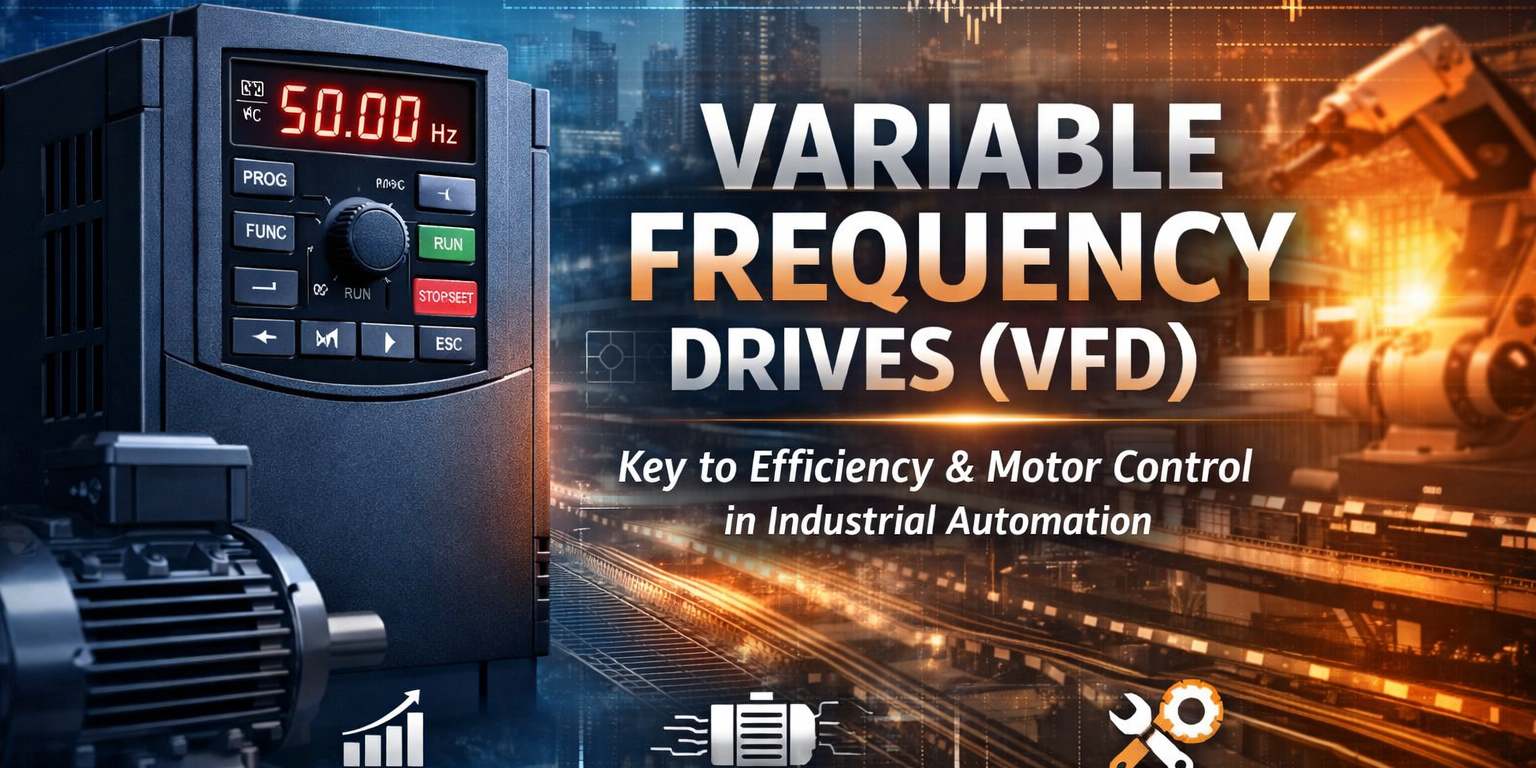
In today’s industrial environment, efficiency, precision, and energy savings are no longer optional. One of the most important technologies that helps achieve these goals is the Variable Frequency Drive, commonly known as a VFD.
A VFD is an electronic device used to control the speed and torque of an electric motor by varying the frequency and voltage of the power supplied to it. Instead of running a motor at full speed all the time, a VFD allows smooth speed control based on actual process requirements.
How a VFD Works
A VFD works in three main stages:
-
Rectifier
Converts incoming AC power into DC power. -
DC Bus
Filters and stores the DC power to ensure stable output. -
Inverter
Converts DC back into AC at a variable frequency and voltage, allowing precise motor speed control.
By adjusting the output frequency, the VFD directly controls motor speed. Lower frequency means lower speed, higher frequency means higher speed.
Key Benefits of Using VFDs
Energy Savings
VFDs significantly reduce energy consumption, especially in applications like pumps, fans, and compressors. Running motors only at required speeds can save up to 30–50% energy in some cases.
Smooth Motor Start and Stop
Unlike direct-on-line starters, VFDs provide soft starting and stopping. This reduces mechanical stress on motors, gearboxes, belts, and couplings, increasing equipment life.
Improved Process Control
VFDs allow accurate speed regulation, which improves product quality and consistency in manufacturing processes.
Reduced Maintenance Costs
Lower mechanical stress and controlled operation result in fewer breakdowns and reduced maintenance expenses.
Motor Protection
Most VFDs include built-in protection features such as overcurrent, overvoltage, undervoltage, overload, and thermal protection.
Common Applications of VFDs
VFDs are widely used across industries, including:
-
Pumps and water treatment plants
-
HVAC systems
-
Conveyor systems
-
Machine tools
-
Crushers and mixers
-
Packaging and material handling machines
-
Textile, cement, steel, and food processing industries
Any application where speed control or energy efficiency is required can benefit from a VFD.
Types of VFD Control Methods
V/F Control (Voltage/Frequency Control)
Simple and cost-effective. Suitable for pumps, fans, and basic speed control applications.
Vector Control
Provides better torque control and faster response. Ideal for conveyors, extruders, and heavy-load applications.
Servo or Closed-Loop Control
Used where very high accuracy and dynamic performance are required.
Choosing the Right VFD
When selecting a VFD, consider the following factors:
-
Motor rating (kW/HP, voltage, current)
-
Application type (constant torque or variable torque)
-
Load characteristics
-
Environmental conditions (dust, heat, moisture)
-
Communication requirements (Modbus, Profibus, Ethernet/IP, etc.)
-
Required safety features
Choosing the right VFD ensures optimal performance and long-term reliability.
VFDs in Modern Automation Systems
Modern VFDs easily integrate with PLCs, HMIs, and SCADA systems. This allows centralized control, real-time monitoring, fault diagnostics, and data analysis, making them a key component of smart factories and Industry 4.0 solutions.
Conclusion
Variable Frequency Drives play a critical role in improving energy efficiency, enhancing motor control, and reducing operational costs in industrial automation. Whether you are upgrading an existing system or designing a new one, implementing the right VFD can deliver long-term benefits in performance, reliability, and savings.
At Avnika Electrosystems, we provide reliable VFD solutions along with complete industrial automation support, including PLCs, HMIs, sensors, and system integration services. Our team helps you select, configure, and deploy the right drive for your application.
